

Global

Global Mobility Insights from K2 Group, Q2 2026 - Part I

The global mobility landscape continues to evolve rapidly, shaped by ongoing geopolitical tensions, regulatory changes, and shifting market dynamics across key regions.

Throughout Q2 and moving into Q3 2026, organisations continue to navigate complexities in the movement of goods and people, with impacts on shipping, housing availability, and regional stability.

This report provides an overview of the current trends and challenges affecting global mobility programmes, drawing on insights from K2’s partner network and regional experts. It highlights key developments across shipping and logistics, housing markets, and emerging risks that may influence assignment planning and delivery.

Shipping

Middle East:

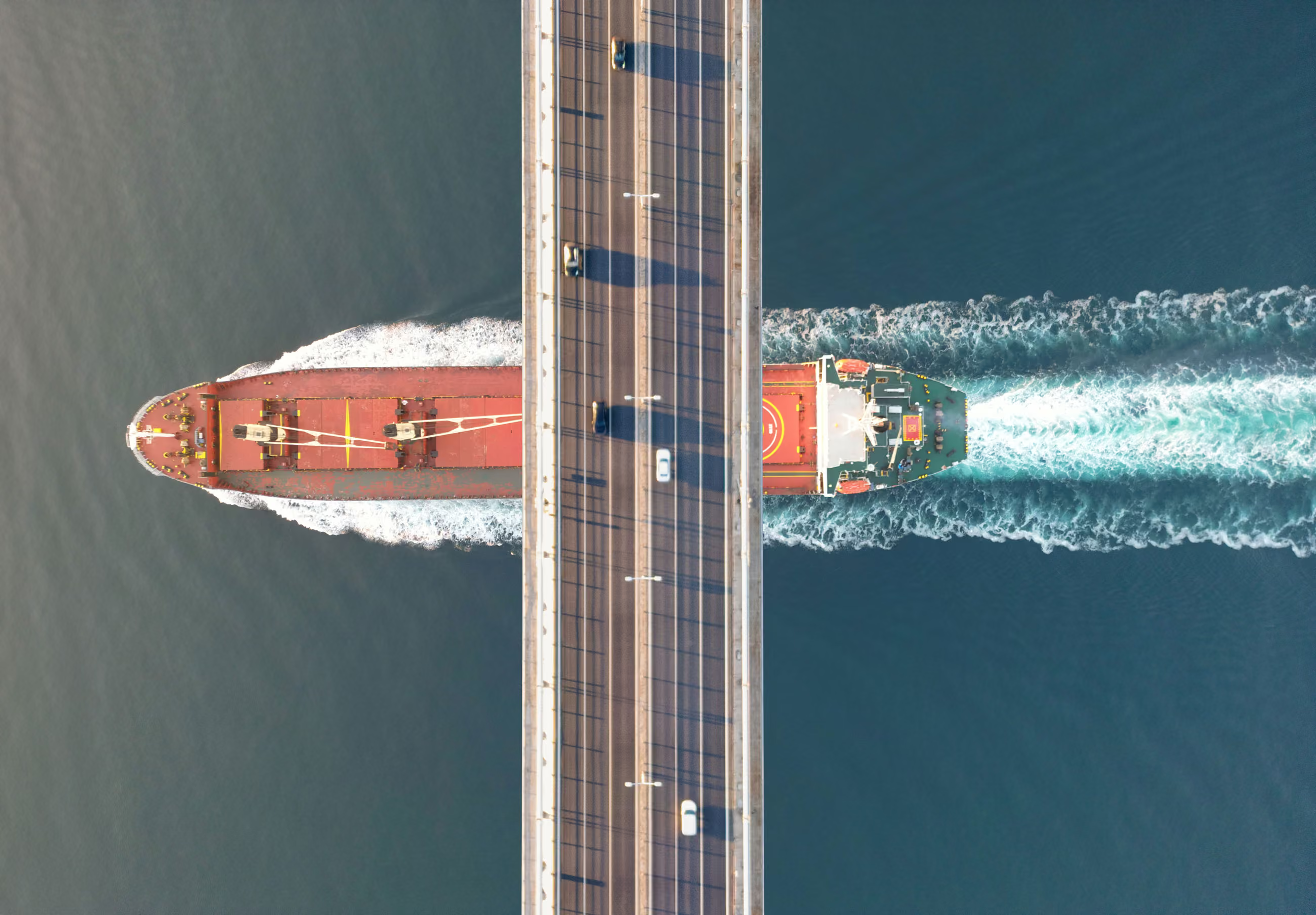
The ongoing geopolitical tensions in the Middle East, particularly those impacting the Red Sea and Suez Canal transit routes, continue to drive significant disruption across global shipping lanes. Many carriers are rerouting vessels around the Cape of Good Hope to avoid high-risk areas, leading to extended transit times of approximately 10–20 days.

This rerouting has introduced some downstream impacts, including reduced vessel capacity, schedule unreliability, and increased congestion at alternative ports. As a result, freight costs remain elevated, with surcharges - including emergency risk and fuel surcharges - being applied at short notice, in some cases to shipments already in transit.

In parallel, regional fuel price increases of up to 127% are driving broader operational cost inflation. Combined with currency volatility, this is placing sustained pressure on logistics providers, with overall operational cost increases currently estimated at 20%–50%. These conditions are expected to persist into Q3, particularly if shipping routes remain restricted.

On a more positive note, mediators Qatar and Pakistan have reported “encouraging progress” following the first round of US–Iran negotiations. The talks build on a recently signed Memorandum of Understanding, which establishes a temporary ceasefire, commits both sides to halting hostilities, and sets out a 60‑day framework for negotiating a longer-term peace agreement. The agreement also includes provisions to reopen the Strait of Hormuz; however, implementation remains gradual and subject to ongoing negotiations and security conditions.

LATAM:

Import regulations across Latin America continue to evolve, requiring close monitoring. In Mexico, the Menaje de Casa programme remains a strict legal requirement for the duty-free import of household goods shipments. For non-Mexican nationals, this benefit must be secured prior to shipment. However, individuals holding a Permanent Resident Card issued more than six months prior to relocation are no longer eligible to apply. As the importation of household goods outside this scheme is not permitted, even with tax payments, this creates a significant barrier.

Clients are therefore advised to identify these scenarios early in the planning process to mitigate disruption, manage expectations, and explore alternative solutions such as storage or furnished accommodation.

UK:

The UK shipping environment remains stable, with no significant disruption reported at major ports. Container availability is strong, and overall port operations are functioning efficiently. However, transportation costs have seen a moderate increase, largely driven by inflationary pressures, rising fuel costs, and ongoing labour market constraints. Market conditions are expected to remain relatively stable in the near term.

Africa:

In South Africa, adverse weather conditions over the past few weeks have created some delays, particularly in Cape Town. Logistics in the city are also being impacted by ongoing port issues, a result of the port’s infrastructure not being maintained in recent years. However, gradual improvements to the infrastructure will increase efficiencies going forwards.

West Africa is experiencing port congestion, particularly in Lagos and Timar. This is a result of ships being rerouted around Africa due to the conflict in the Middle East and then making unscheduled stops, as well as customs processes having become more rigorous.

In East Africa, inland logistics and border processes remain a challenge, particularly in terms of regional distribution. However, process efficiencies at Mombasa and Dar es Salaam ports are now starting to take effect.

Please note: Whilst we are experiencing freight increases in certain areas, particularly those affected by the Middle East conflict, these increases are not being experienced globally. When increases are unavoidable, we work with our partner network to keep them as low as possible.

Part II of Global Mobility Insights from K2 Group, Q2 2026, can be found here.

Frequently asked questions

Straight answers to the questions we hear most about global mobility.

What does K2 Group's Q2 2026 Global Mobility Insights report cover?

+

The report provides an overview of current trends and challenges affecting global mobility programmes in Q2 and into Q3 2026. Part I focuses on shipping and logistics and emerging risks. It draws on insights from K2's partner network and regional experts.

How are Middle East tensions affecting global shipping in 2026?

+

Ongoing geopolitical tensions affecting the Red Sea and Suez Canal routes continue to disrupt global shipping lanes. Many carriers are rerouting vessels around the Cape of Good Hope, adding roughly 10 to 20 days of transit time. This has reduced vessel capacity, made schedules less reliable and kept freight costs elevated.

Why are shipping costs rising for global mobility in 2026?

+

Freight costs remain elevated because carriers are rerouting away from high-risk areas, reducing capacity and adding surcharges at short notice. Regional fuel price increases of up to 127% are driving broader operational cost inflation. Currency volatility is adding further pressure on logistics.

What surcharges are affecting shipments in 2026?

+

Carriers are applying surcharges, including emergency risk and fuel surcharges, at short notice. In some cases these are being applied to shipments already in transit. The surcharges add to already elevated freight costs across affected routes.
