Events

Transforming Global Mobility Talent, Technology and a Changing World

LMLM September 2026

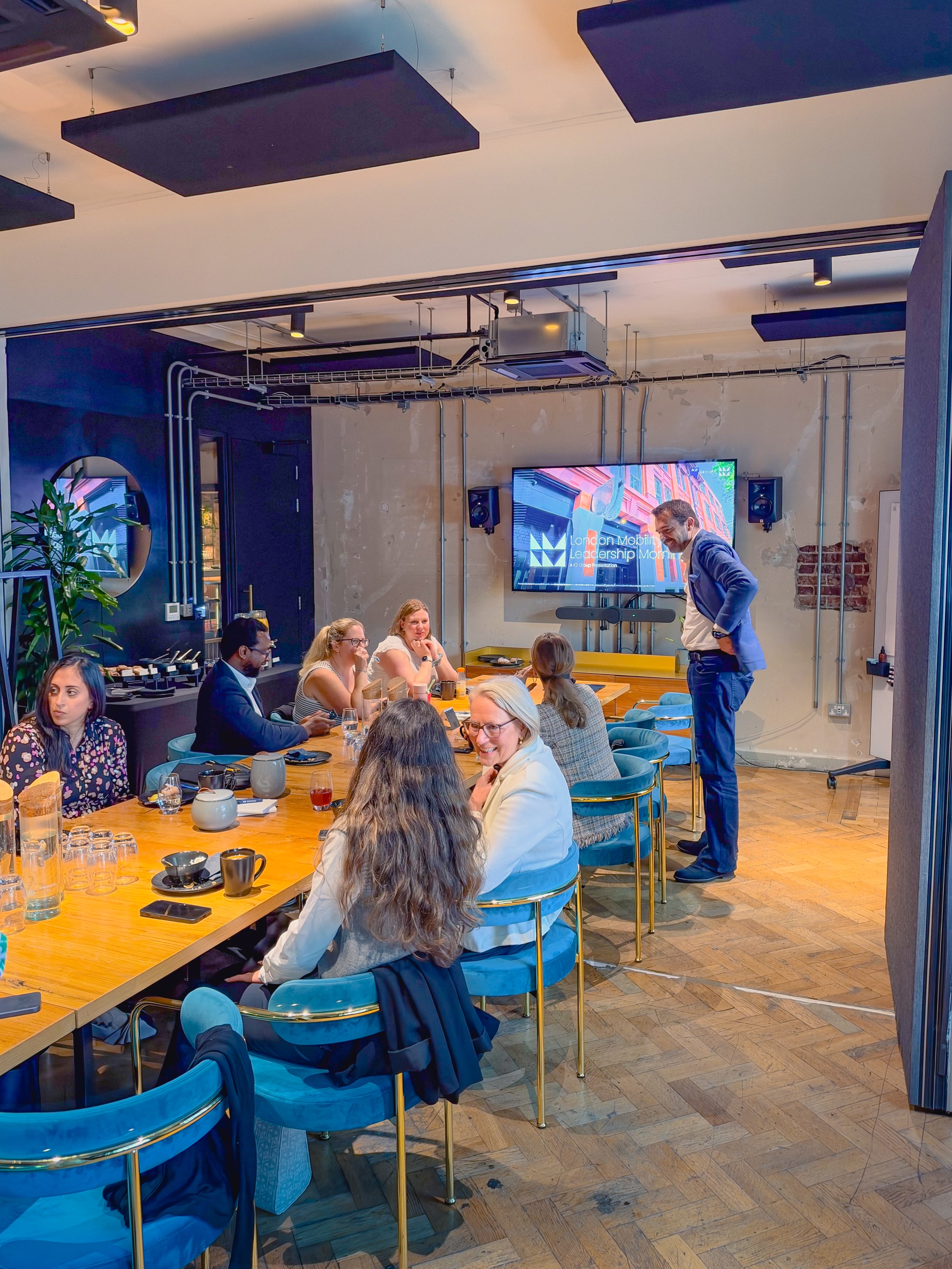
On 23 September, K2 Group welcomed Global Mobility and HR leaders to The Ministry in London for our latest London Mobility Leadership Morning. The event brought together practitioners from across the mobility community to explore how organisations are responding to enterprise transformation, evolving workforce expectations, AI adoption and an increasingly complex immigration landscape.

Across three thought-provoking sessions, one theme emerged consistently: Global Mobility is evolving from a service function focused on moving people into a strategic capability that helps organisations make better talent, workforce and business decisions.

Mobility's Strategic Reinvention

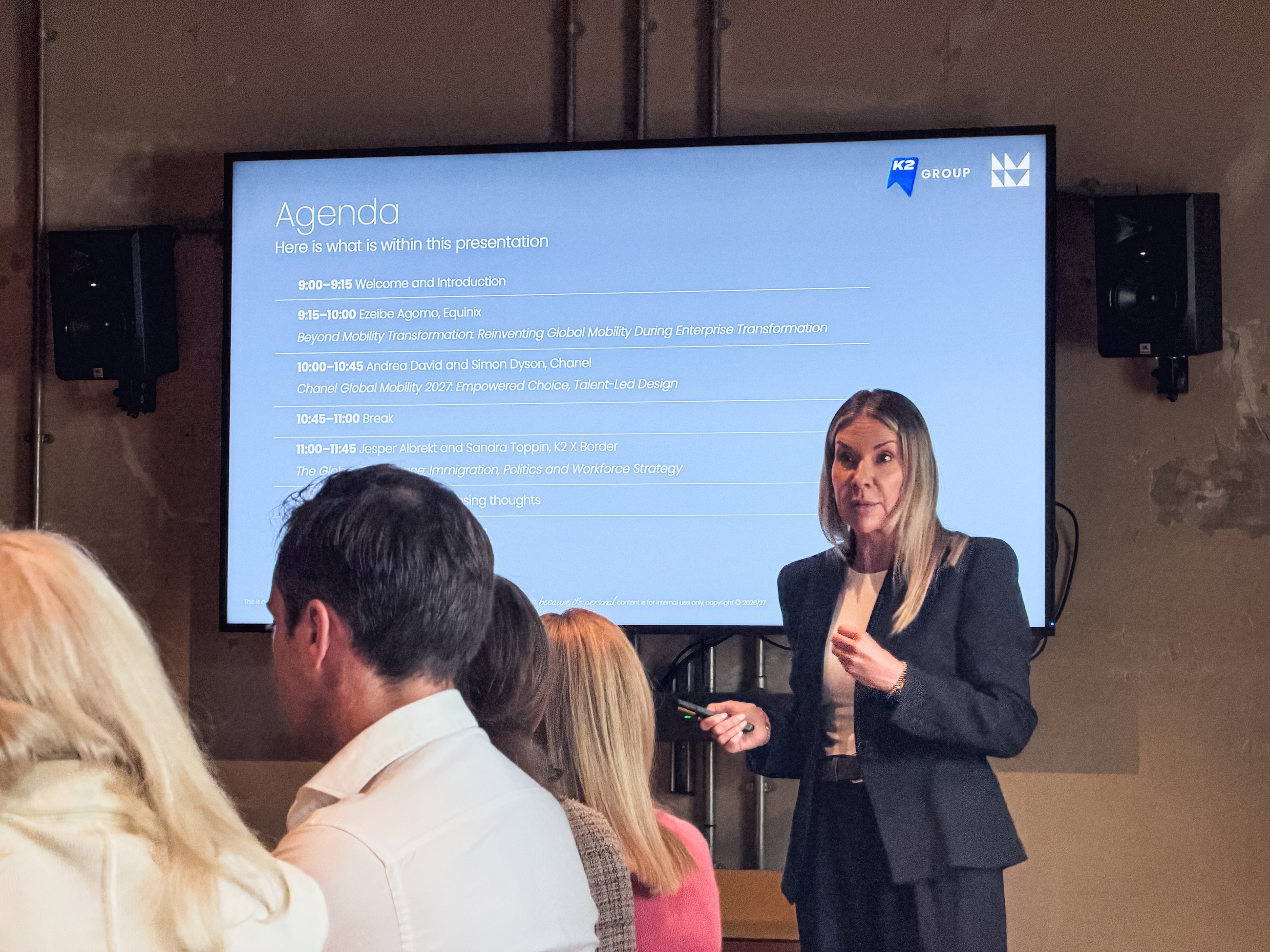
The morning began with Ezeibe Agomo, Director of Global Mobility & Immigration at Equinix, who shared the organisation's ongoing transformation journey and the lessons learned from redesigning mobility within a wider enterprise transformation programme.

Rather than viewing mobility transformation in isolation, Ezeibe highlighted the wider forces reshaping organisations today, including digital transformation, cost optimisation, AI adoption, operating model redesign and workforce reshaping. These changes are challenging mobility teams to rethink not only how they deliver services, but the value they bring to the business.

A key discussion point centred on the transition from high-touch, relationship-based support models towards policy-led, self-service approaches supported by technology and AI. However, the focus was not technology for technology's sake. Instead, the emphasis was on creating clearer governance, better decision-making frameworks and scalable operating models that allow mobility professionals to focus on strategic judgement rather than routine administration.

Perhaps most notably, attendees explored how mobility's future value may increasingly lie in providing workforce intelligence, regulatory insight and risk management rather than simply facilitating employee moves. As Ezeibe concluded, leading mobility functions will increasingly help organisations understand what moving people means for the business, not just how to move them.
Talent-Led Mobility at Chanel

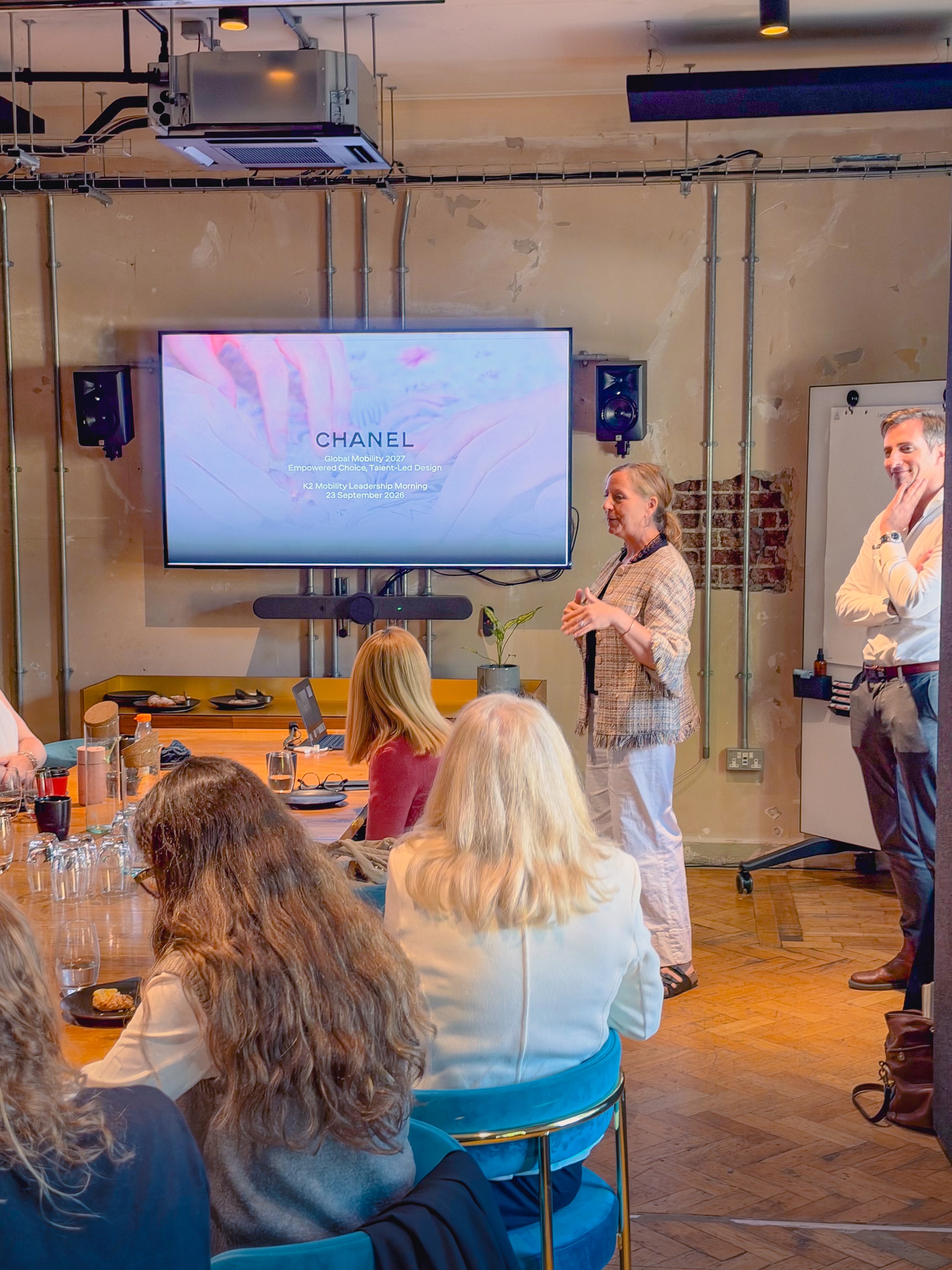
The second session featured Andrea David and Simon Dyson from Chanel, who shared the organisation's vision for Global Mobility 2027. The session examined Chanel's journey towards a more employee-led approach that balances business objectives, employee choice and evolving talent expectations.

A central theme throughout the discussion was the increasing importance of flexibility and personalisation in mobility programme design. Organisations are seeking ways to support a broader range of talent needs while maintaining cost discipline, consistency and compliance. The session also explored how AI is supporting programme design and helping mobility teams evaluate future approaches more effectively.

Attendees were particularly interested in the relationship between mobility and talent strategy, and how mobility programmes can better support attraction, retention and workforce development objectives in an increasingly competitive global talent market.

The Global Talent Race

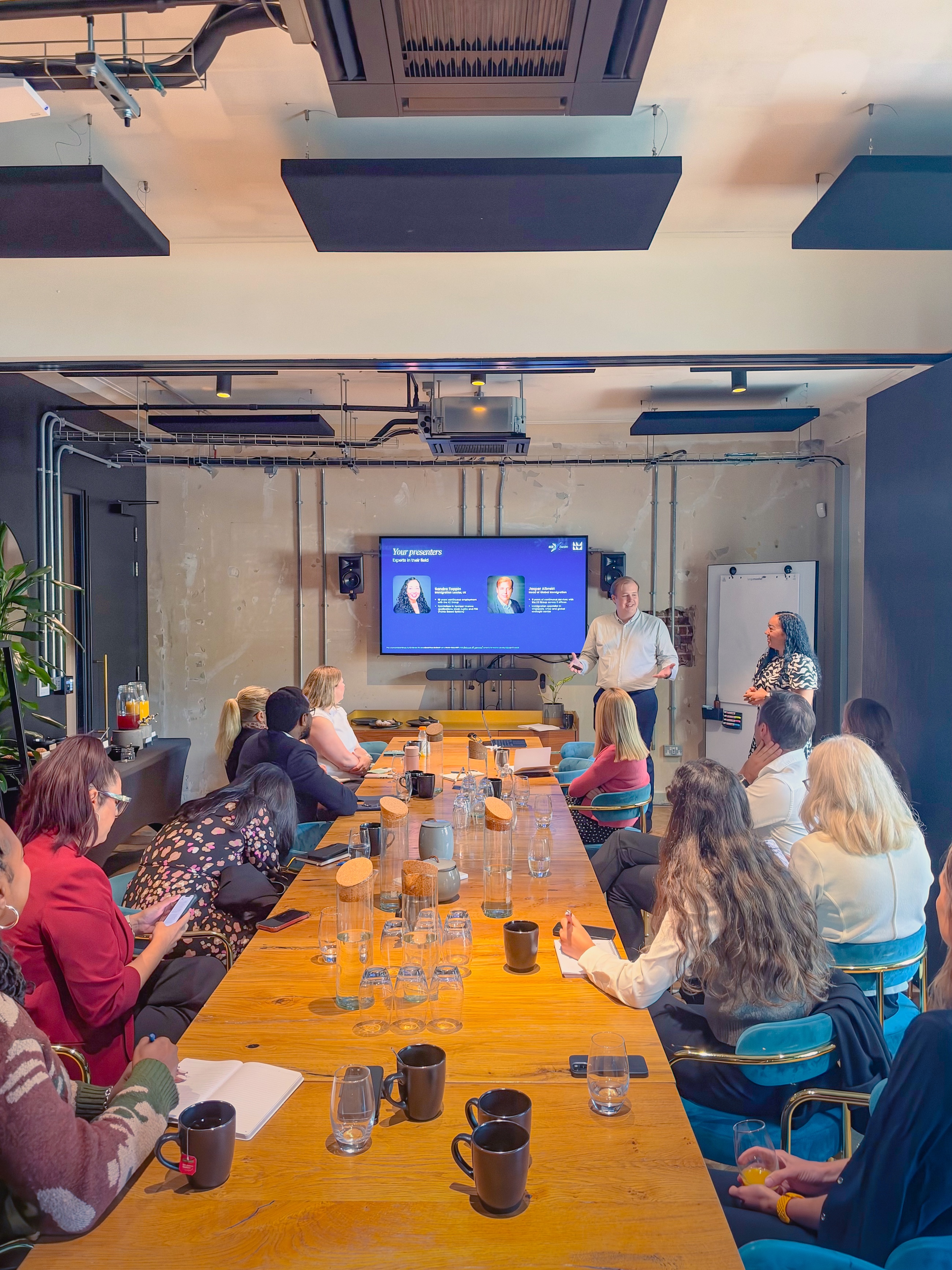
The final session, delivered by Jesper Albrekt and Sandra Toppin from K2 X Border, examined the growing connection between immigration policy, politics and workforce strategy.

The discussion highlighted how governments across many jurisdictions are attempting to balance competing priorities: attracting highly skilled talent while responding to domestic political and economic pressures. Examples from the UK, Australia, the United States and Singapore demonstrated how immigration systems are becoming increasingly selective, with greater emphasis on skills, salary thresholds and economic contribution.

Particular attention was given to upcoming UK immigration developments, including proposed changes to settlement routes, evolving sponsorship requirements and extended Right to Work responsibilities. The session prompted valuable discussion around the growing compliance expectations employers face and the need for proactive workforce planning.

The overarching message was clear: immigration can no longer be viewed solely as a compliance topic. For many organisations, it is becoming a strategic enabler of workforce planning, talent acquisition and business growth.

Key Takeaways

Several themes resonated strongly throughout the morning:

  • Global Mobility is becoming increasingly strategic and closely aligned with wider business priorities.
  • AI has significant potential to improve efficiency, but human judgement remains critical for decision-making and risk management.
  • Flexibility, employee experience and talent-led design are increasingly shaping mobility programmes.
  • Immigration policy is becoming more dynamic, requiring organisations to plan further ahead and monitor change more closely.
  • Cross-functional collaboration between mobility, HR, talent, tax, legal and business leaders will be essential for future success.

‍

The event concluded with networking over lunch, providing attendees with an opportunity to continue conversations, share experiences and discuss how these trends are impacting their own organisations.

As Global Mobility continues to evolve, the discussions reinforced an important point: the organisations that succeed will be those that position mobility not simply as an operational function, but as a strategic partner in workforce planning, talent management and business transformation.

Organisations that position mobility as a strategic contributor to workforce planning and talent management will be best placed to navigate an increasingly complex global environment. To explore how mobility, immigration and workforce strategy intersect, visit our latest Global Mobility Insights.

Frequently asked questions

Straight answers to the questions we hear most about global mobility.

Why is Global Mobility becoming more strategic?

+

Global Mobility is evolving beyond managing employee relocations to becoming a key contributor to workforce planning, talent management and business decision-making. Organisations are increasingly relying on mobility teams for workforce intelligence, regulatory insight and risk management to support wider business objectives.

How is AI impacting Global Mobility programmes?

+

AI is helping mobility teams improve efficiency, support policy-led self-service models and evaluate programme design more effectively. While technology can streamline administrative processes, human expertise remains critical for managing risk, compliance and strategic decision-making.

What are the biggest global mobility challenges organisations face in 2026?

+

Organisations continue to face challenges related to longer immigration processing times, limited housing availability in key relocation destinations, rising temporary accommodation costs, and evolving local regulations. Early planning and proactive policy reviews can help minimise delays, manage costs, and support positive employee relocation experiences.