

Events
Global

Midlands Global Mobility Forum: Autumn 2025 Key Takeaways

Article

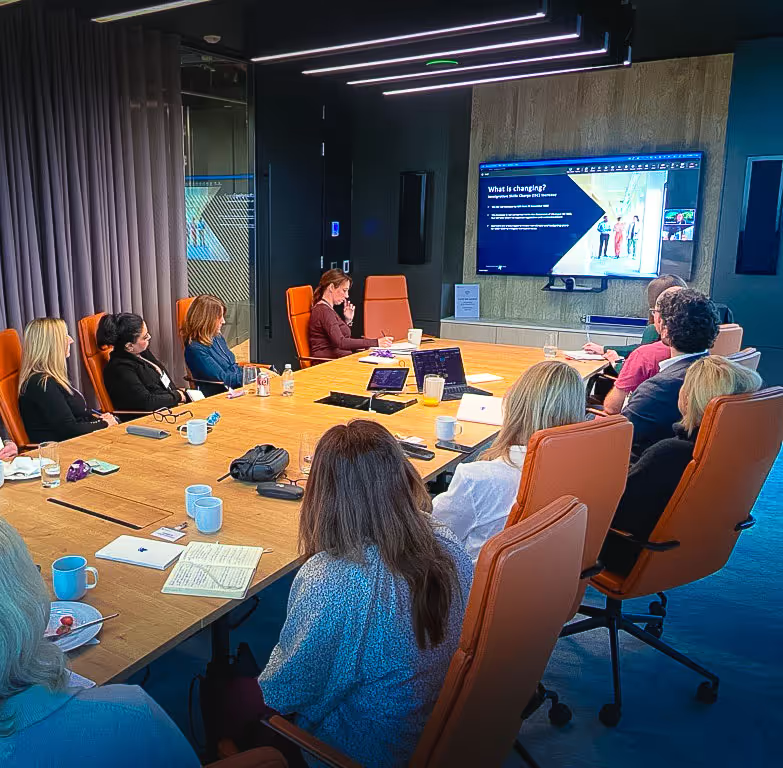
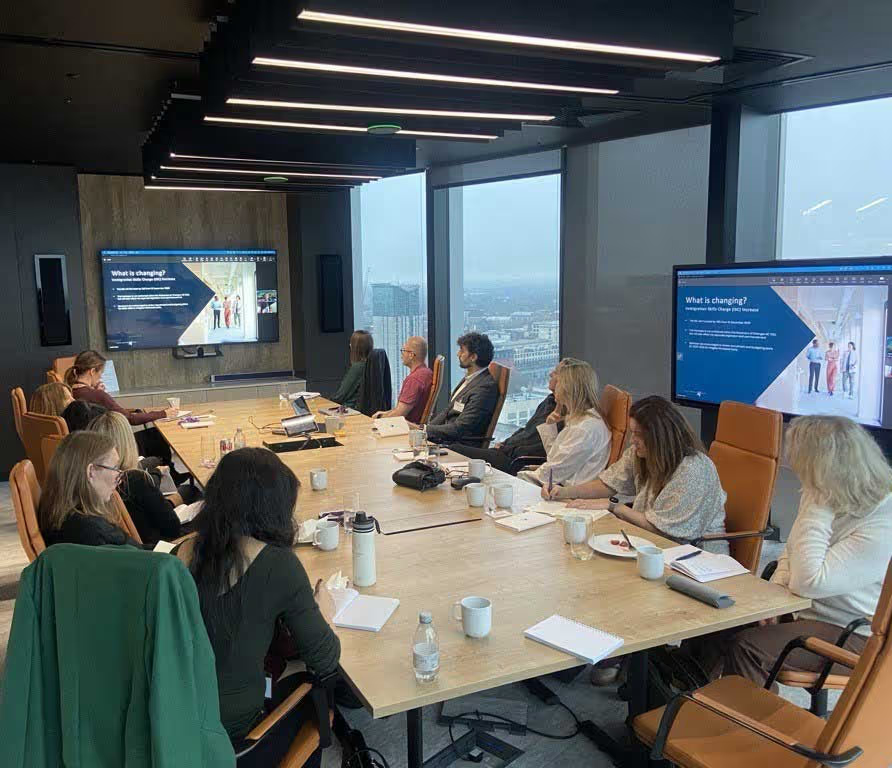
On 12 November, K2 Corporate Mobility was delighted to welcome clients, partners, and peers to the Autumn Midlands Global Mobility Forum (MGMF), hosted at the Grant Thornton offices in Birmingham.

The morning was shaped around practical updates, peer-led discussion, and the opportunity to connect over coffee and lunch, a hallmark of the MGMF’s collaborative spirit.The forum opened with a warm welcome and introductions, setting the tone for a morning focused on actionable insights and open dialogue. Attendees represented a diverse cross-section of the mobility community, united by a shared commitment to navigating the evolving landscape of global talent management.

Tax & Social Security Update: Navigating Change with Confidence

The first session, led by Megan Hand and Gill Wood of Grant Thornton, provided a timely overview of the latest developments in tax and social security for internationally mobile employees.

Key highlights included:

  • HMRC’s New Guidance on National Insurance Apportionment:
    The session unpacked HMRC’s updated approach to National Insurance Contributions (NICs) for internationally mobile employees, clarifying when apportionment applies and what this means for businesses. Employers are recommended to review historic NIC calculations, quantify any potential exposure, and make corrections for the previous six years if needed. The importance of robust payroll processes and technical readiness was emphasised, ensuring compliance with the new guidance and minimising risk.
  • Cross-Border Data Sharing and A1 Focus:
    Attendees heard about the increasing effectiveness of the Electronic Exchange of Social Security Information (EESSI) and the upcoming European Social Security Pass (ESSPASS), which will streamline access to A1 certificates via an app, giving individuals digital access to their portable documents and enable real time verification systems across borders.
  • Payrolling of Benefits:
    The implications of payrolling benefits for internationally mobile employees were discussed in line with HMRC’s latest updates regarding the mandatory payrolling of benefits from April 2027. The session underscored the need for clear internal processes and controls to ensure accuracy and compliance.

Perspectives on Generative AI: From Buzzwords to Business Value

Dr Mac Misiura, Senior Machine Learning Engineer at RedHat, delivered an accessible and engaging walkthrough of generative AI (GenAI) for enterprise use. The presentation demystified key concepts—AI, ML, DL, and GenAI—and showcased live examples across text, images, audio, video, and 3D modalities.

Key takeaways:

  • Foundation Models and Enterprise Adoption:
    Dr Mac Misiura highlighted recent breakthroughs in AI, including the shift to foundation models, and explored what these advances mean for real-world adoption. Attendees left with a clearer understanding of how GenAI can drive innovation and efficiency in global mobility and beyond.

UK Immigration Update: Practical Guidance for Mobility Teams

Sandra Toppin, K2 X Border’s Immigration Leader, provided a comprehensive update on the UK immigration landscape, focusing on the practical implications for employers and applicants.

Key updates included:

  • Immigration Skills Charge (ISC) Increase:
    From 16 December 2025, the ISC will rise by 32%. Sponsors are encouraged to review recruitment and budgeting plans for 2025–2026 to mitigate increased costs.
  • English Language Requirement:
    From 8 January 2026, the minimum English proficiency for Skilled Worker, High Potential Individual, and Scale-up routes will increase from B1 to B2 (CEFR), equivalent to A level. Existing visa holders extending in the same category will remain at B1.
  • Graduate Visa Changes:
    From 1 January 2027, the Graduate Visa duration will reduce from two years to 18 months for most applicants, with PhD graduates retaining a three-year visa.
  • eVisa Transition Expansion:
    Following the removal of 90-day entry clearance vignettes for most work and study routes, the next phase will extend to non-work/study routes and dependents, expediting visa processing and reducing administrative burden.
  • Sponsorship Licence Housekeeping:
    The session reinforced the importance of robust compliance, recordkeeping, and timely reporting. With a notable increase in revoked licences, sponsors were reminded of their obligations and the potential penalties for non-compliance, including civil penalties, licence downgrades, and reputational risk.

Looking Ahead

The forum concluded with a lively Q&A and a networking lunch, giving attendees the chance to share experiences and build connections. As always, K2 Corporate Mobility remains committed to supporting clients through change, offering practical guidance, expert insight, and a truly personal service.

Thank you to all who joined us for the Autumn MGMF. We look forward to seeing you at future events!

For further information or to discuss any of the topics covered, please contact us.

Frequently asked questions

Straight answers to the questions we hear most about global mobility.

What has changed in HMRC's guidance on National Insurance apportionment for internationally mobile employees?

+

HMRC has updated its guidance on National Insurance Contributions for internationally mobile employees, clarifying when apportionment applies and what this means for employers. The change means businesses need to review how NICs are calculated for staff who split their work between the UK and other countries.

Employers are recommended to review historic NIC calculations, quantify any potential exposure and make corrections for the previous six years where needed, supported by robust payroll processes to stay compliant going forward.

How much is the UK Immigration Skills Charge increasing, and when?

+

The UK's Immigration Skills Charge (ISC) will rise by 32% from 16 December 2025. This is a mandatory cost that sponsors pay when hiring skilled workers from overseas, so the increase has a direct impact on recruitment budgets.

Sponsors are encouraged to review their recruitment and budgeting plans for 2025 to 2026 ahead of the change, to mitigate the increased cost of sponsoring overseas hires.

Is the English language requirement for UK Skilled Worker visas changing?

+

The English language requirement for the Skilled Worker, High Potential Individual and Scale-up visa routes is increasing. From 8 January 2026, the minimum proficiency rises from B1 to B2 on the CEFR scale, equivalent to A level standard.

Existing visa holders who are extending their visa in the same category will remain at the current B1 level, so the change primarily affects new applicants under these routes.

How is the UK Graduate Visa changing from 2027?

+

From 1 January 2027, the standard UK Graduate Visa will reduce in length from two years to 18 months for most applicants. PhD graduates are the exception and will retain the current three-year visa duration.

The change forms part of a wider tightening of UK immigration rules, alongside a rising Immigration Skills Charge and stricter English language requirements for other visa routes.

What is the European Social Security Pass (ESSPASS) and how does it affect A1 certificates?

+

The European Social Security Pass (ESSPASS) is an upcoming system that will streamline access to A1 certificates through an app, giving individuals digital access to their portable social security documents. It works alongside the Electronic Exchange of Social Security Information (EESSI), which is already improving cross-border data sharing between authorities.

Together, these systems are expected to enable real time verification of A1 certificates across borders, reducing the administrative burden of proving social security coverage for internationally mobile employees.
