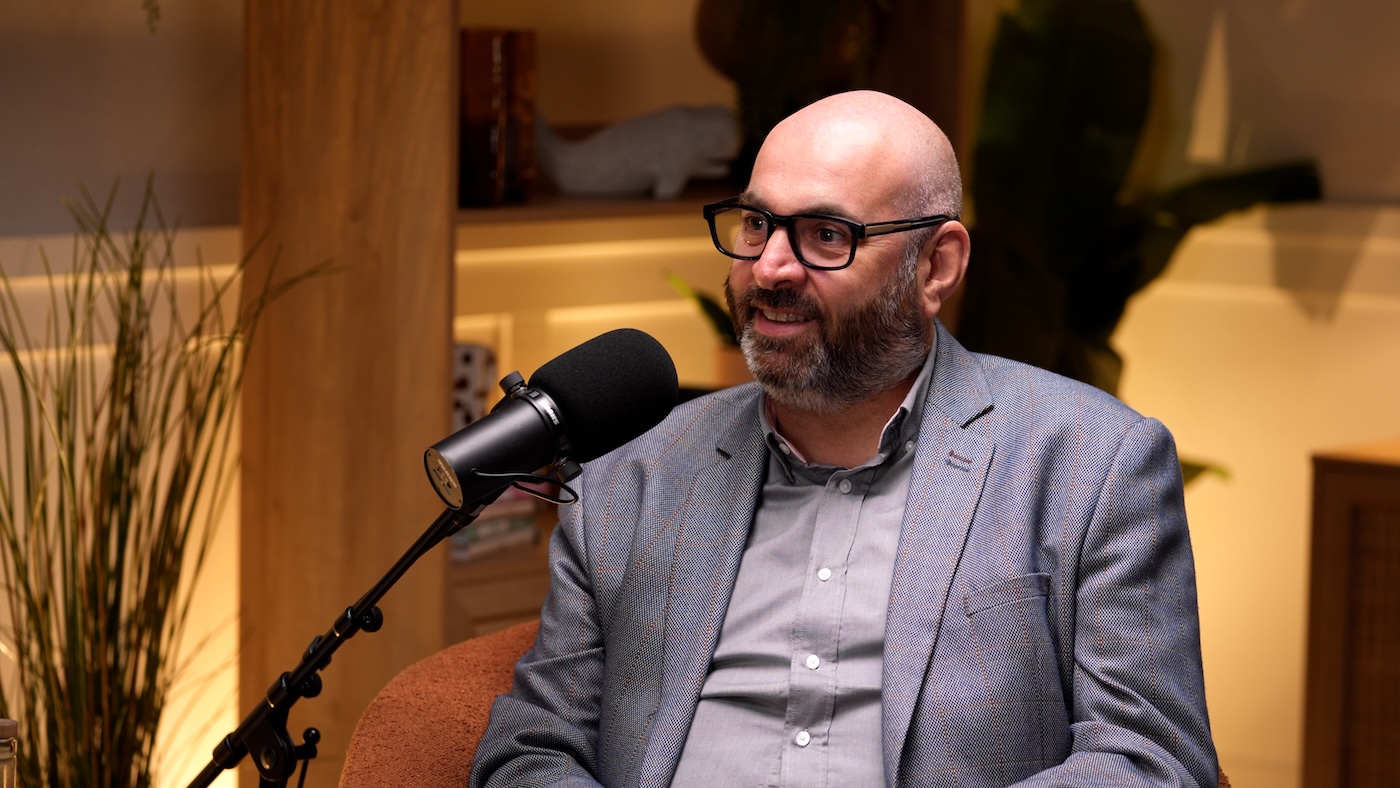


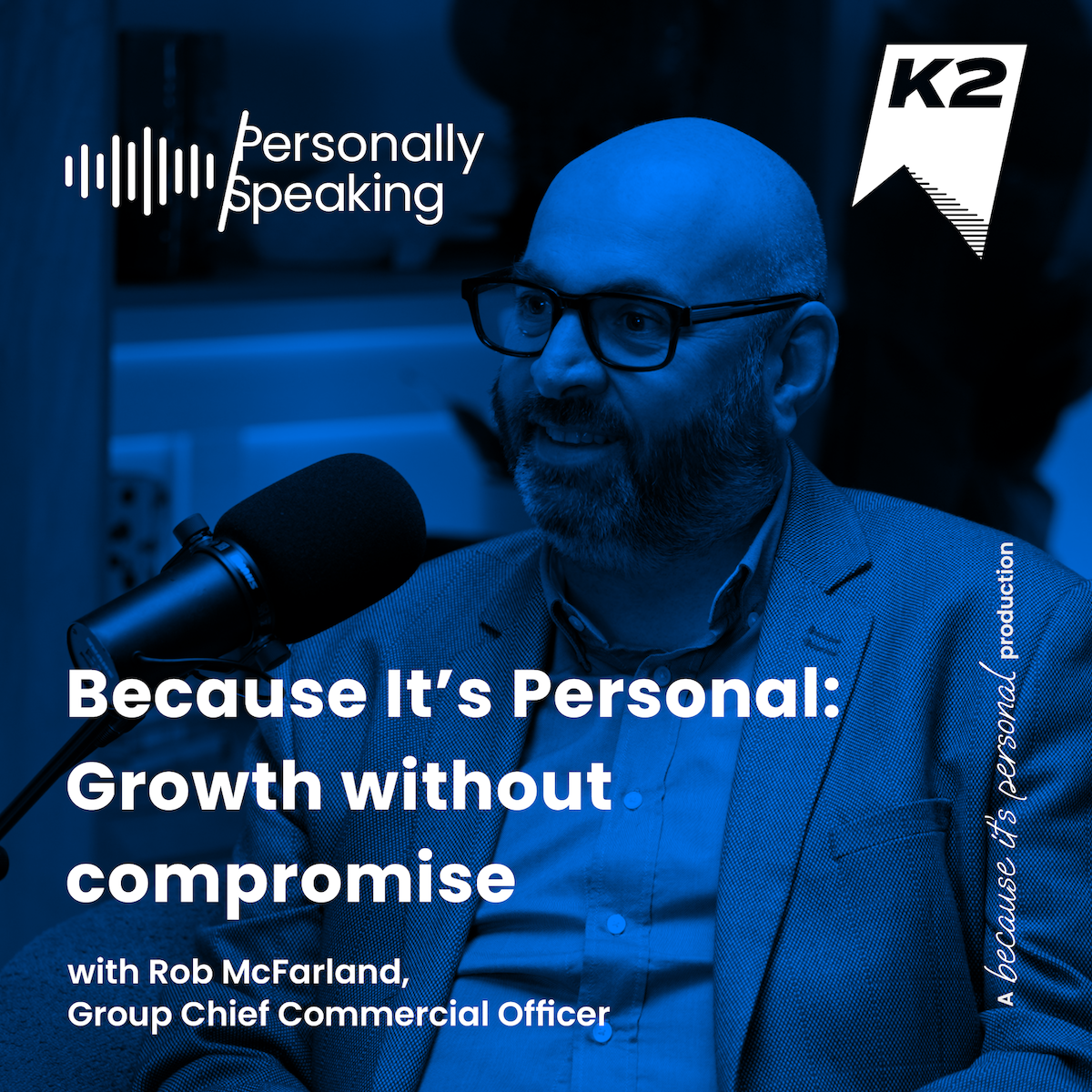
In this episode of Personally Speaking, Global Marketing Director, James Marshall, sits down with Rob McFarland, Chief Commercial Officer at K2 Group. Drawing on his experience as a relocating employee, a former K2 client and now K2’s CCO and a Board member, Rob shares what organisations should look for in a Relocation Management Company (RMC), how mobility requirements have evolved and why trust remains central to a successful relocation partnership.

How can an RMC support global mobility programme growth?
Listen to the latest episode
This episode explores how organisations can build and scale global mobility programmes without compromising service, compliance, cost control or employee experience. Global mobility now extends far beyond the physical relocation itself. It requires organisations to navigate immigration, payroll, social security, data protection, global payments and the personal priorities of relocating employees and their families.
Here are the key topics and questions that every HR and mobility professional should consider:
- How an RMC can support global mobility programme growth
- Controlling costs without compromising employee experience
- What to look for when choosing an RMC
- How technology and human support should work together in global mobility
- The importance of trust and partnership in global mobility
An organisation should consider involving an RMC when managing relocations begins to place additional pressure on HR teams, mobility professionals or business leaders. For growing organisations without a dedicated mobility function, relocations may be managed alongside employees’ existing responsibilities, increasing distraction and making it more difficult to deliver a consistent experience.
An RMC does not necessarily need to take control of the entire programme immediately. Instead, it can support the areas that are slowing the organisation down or creating risk. This could include helping to navigate immigration, payroll, social security and other compliance considerations, coordinating service providers or addressing challenges identified during previous relocations.
For organisations with established mobility programmes, the need for additional support may arise when entering a new market, responding to a restructure, supporting mergers and acquisitions or relocating senior employees who require greater levels of care. The right RMC should understand the organisation’s immediate challenge while also considering how the programme may need to evolve in the future.

How can an RMC support global mobility programme growth?
An RMC can support global mobility programme growth by combining specialist expertise, structured processes and coordinated service delivery. As an organisation’s relocating population grows, so does the complexity of managing compliance, communication, payments, suppliers and employee expectations.
For organisations at the beginning of their mobility journey, support may initially focus on overcoming immediate challenges and ensuring employees can move compliantly. Once those foundations are in place, the programme can develop to incorporate policy design, technology integration, talent management and more sophisticated communication tools.
The needs of an established programme will be different. These organisations may be looking to improve cost visibility, reduce the workload placed on internal teams, simplify employee touchpoints or strengthen the consistency of the relocation experience. An effective RMC should be able to adapt its approach around the client’s culture, values and operational requirements rather than applying the same model to every programme.
Can organisations control costs without compromising employee experience?
Organisations can control relocation costs without compromising employee experience because a positive experience is not determined by luxury. It is created by completing the fundamentals well, communicating clearly and ensuring employees feel that someone is genuinely invested in the success of their move.
Relocating employees and their families want to understand what is happening, what will happen next and who they can approach when they need support. A well-managed relocation addresses their priorities in a logical order, provides clear updates and reduces the distractions that could prevent the employee from focusing on their new role or the family from settling into their new location.
Sometimes, relatively small changes can make a meaningful difference. Rob gives the example of adding a household goods put-away service following delivery. Although this represents an additional cost, it can help turn a house into a home more quickly, reduce stress for the family and allow the relocating employee to focus on the role they have moved to perform.
The objective is not always to spend more. It is to understand where investment will have the greatest impact and remove unnecessary friction from the relocation journey.
What should organisations look for when choosing an RMC?
When choosing an RMC, organisations should look beyond cost, technology and whether a provider can meet a defined set of KPIs. These factors are important, but they do not provide a complete picture of how the partnership will work in practice.
One of the first questions organisations should ask is how many people or teams will interact with the relocating employee and their family. A high number of touchpoints can make the experience feel fragmented, so organisations should consider how the process can be simplified.
They should also ask how the RMC will provide reassurance that important compliance responsibilities have been considered. This may include immigration, payroll, social security and wider regulatory requirements. The objective should be to reduce the risk of unexpected issues emerging later in the relocation process.
Cultural alignment is equally important. Different organisations define employee experience in different ways. Some want a seamless but strongly human-led service, while others want employees to have greater access to technology, AI and self-service tools, supported by a person when more complex help is required. The right RMC should fit the organisation’s culture and mobility objectives rather than expecting the organisation to adapt to a fixed delivery model.
How should technology and human support work together in global mobility?
Technology and human support should complement one another. Technology can improve access to information, simplify processes and reduce repetitive questions, but it should not remove the support employees need during complex or emotionally significant moments.
For larger mobility programmes, communication platforms can help place clear, relevant information in front of employees early in the relocation process. Video content, digital guidance and AI-supported tools can answer common questions conveniently while reducing the volume of enquiries directed to internal mobility teams.
However, international relocation affects more than an employee’s working location. It can change their home, family life, community, commute and daily routine. Human support remains essential for listening to those individual priorities, building confidence and resolving situations that cannot be addressed through automation alone.
A successful mobility programme therefore does not need to choose between people and technology. It needs to establish how each can be used appropriately to create an efficient, accessible and personal experience.
Why are trust and partnership important in global mobility?
Trust and partnership are important because an RMC is responsible for supporting employees through a major personal and professional change. The relationship should go beyond connecting the client or employee with individual service providers.
A strong RMC takes accountability for the relocation journey, understands what matters to the employee and their family, and communicates what is happening throughout the process. This creates confidence for the relocating employee while reducing pressure on the organisation’s HR and mobility teams.
Trust is also one of the most difficult factors to measure through an RFP, spreadsheet or service-level agreement. It develops when an RMC takes the time to understand the organisation and provides honest advice based on what represents the right fit. In some situations, that may mean acknowledging that a different solution or provider would better meet the organisation’s needs.
Ultimately, technology may enable the mobility programme, but trust and partnership give employees and organisations confidence that support will be available when it matters.
About Rob McFarland
Rob McFarland is Chief Commercial Officer at K2 Group, where he is responsible for driving commercial growth, developing strategic partnerships and helping organisations build mobility programmes that support both business objectives and employee success. Throughout his career, Rob has worked across international HR, compensation and benefits, talent mobility and global workforce strategy, giving him a broad perspective on the challenges organisations face when moving talent around the world.
With experience spanning organisations including Baker Hughes, Goldman Sachs, AMEC, Herbert Smith and PwC Consulting, Rob has spent more than two decades helping businesses navigate the complexities of global mobility, workforce deployment and international talent management. His experience extends beyond service provider relationships, having also led mobility programmes from the client side and personally experienced relocation himself.
This episode highlights how global mobility has evolved beyond logistics and administration to become a strategic enabler of talent mobility. Drawing on his experience across corporate HR, global mobility leadership and commercial operations, Rob shares practical insights on choosing the right RMC, creating meaningful employee experiences and building mobility programmes that scale sustainably.
This episode highlights that successful global mobility programmes are not created through technology, processes or KPIs alone. They are built by understanding the organisation, simplifying complexity and recognising the individual behind every relocation.
Whether an organisation is developing its first mobility programme, entering a new market or reviewing an established RMC partnership, one question should remain at the centre of the process: what is important to the relocating employee and their family?