

Global
Services
Sustainability

Lifecycle Assessment and Systems Thinking Methodologies

Evaluating K2’s processes – An update from the University of Bath

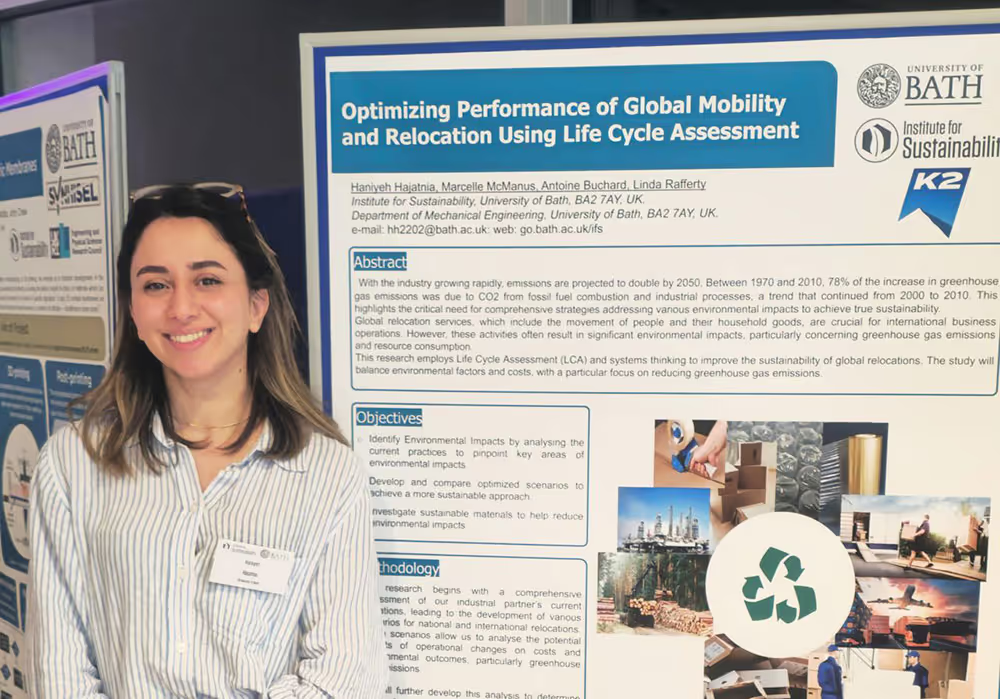
In January of 2023 a PhD studentship opportunity was created within the University of Bath, in partnership with K2, to identify and address the critical environmental impacts of global transportation, focusing on K2’s services and using a variety of tools, including Life Cycle Assessment (LCA).

The background of this study is rooted in the growing recognition of the substantial environmental impacts associated with global mobility and relocation services.

K2 facilitates the movement of people and their goods worldwide. While these services are essential for global businesses, there is a significant environmental impact associated with their delivery, particularly in terms of greenhouse gas emissions and other ecological footprints.

This PhD project, which is being undertaken by the University of Bath in collaboration with K2 as part of an ongoing industry/academia partnership, aims to critically analyse and mitigate the environmental impacts of K2’s operations. The study uses Life Cycle Assessment (LCA) and systems thinking methodologies to comprehensively evaluate K2’s processes, identifying key areas where environmental impacts are most significant.

By creating detailed scenario models, the project will demonstrate how various operational changes can affect costs, emissions, and other environmental indicators. This approach ensures that K2 can make well-informed decisions that balance sustainability goals with economic viability. Additionally, the study emphasises the importance of sustainable packaging materials, reflecting customer priorities and reaffirming K2’s commitment to environmental responsibility. The research from the PhD project will also focus on delivering broader methodological and sectoral insights.

With the studentship having officially started last September, we caught up with Haniyeh Hajatnia, University of Bath PhD student and Project Lead to find out how the project is going, one year in.


What is the aim of the project?

To identify and address the critical environmental impacts associated with Mobility’s operations. Using tools such as Life Cycle Assessment (LCA) and systems thinking methodologies, the project seeks to balance customer acceptance, costs, and environmental factors, particularly greenhouse gases and other environmental footprints.

Ultimately, the goal is to provide K2 with informed decision-making tools, data and information that allow them to optimize their operations for sustainability without compromising economic feasibility.

Can you tell us a bit about Life Cycle Assessment?

Life Cycle Assessment (LCA) is a systematic methodology used to evaluate the environmental impacts of a product, process, or service throughout its entire life cycle. This includes all stages from raw material extraction, production, and use to disposal or recycling.

LCA helps identify areas where environmental improvements can be made, thus supporting informed decision-making aimed at reducing the overall environmental footprint.

What work has been undertaken to date?

Extensive data has been gathered and analysed to help us to understand the current environmental impact of K2 Corporate Mobility’s operations.

We have also undertaken research on different packaging materials with a focus on finding sustainable alternatives to plastic.

The current practices of K2 Corporate Mobility have been analysed, and the impacts of business-as-usual scenarios have been identified to emphasise the key areas that contribute to greenhouse gas emissions and resource consumption.

What are the next steps?

Next steps include conducting a detailed LCA to quantify the environmental impacts of different aspects of K2’s operations, along with developing and proposing strategies to mitigate identified environmental impacts, such as adopting eco-friendly packaging materials and optimising logistics.

We will create a number of different relocation scenarios, including packaging and transportation options, and analyse their environmental impacts.

Further down the line, we will be comparing the environmental, economic and social outcomes of different strategies to determine their long-term sustainability and assess which of these strategies are most viable for sustainable development in the long run.

There is then some work to be done around stakeholder engagement: engaging with stakeholders (including employees, clients, and Partners) to promote awareness and adoption of sustainable practices. We will also need to implement a system for continuous monitoring and improvement to ensure ongoing reduction in environmental impacts.

As part of my final year thesis, I will be preparing comprehensive reports and disseminating findings through various channels, including K2’s website, to highlight the company’s commitment to sustainability.

Frequently asked questions

Straight answers to the questions we hear most about global mobility.

What is Life Cycle Assessment (LCA)?

+

Life Cycle Assessment (LCA) is a systematic methodology used to evaluate the environmental impacts of a product, process or service across its entire life cycle. This covers every stage from raw material extraction and production through to use and eventual disposal or recycling.

LCA helps identify where environmental improvements can be made, supporting informed decision-making aimed at reducing the overall environmental footprint of an operation.

What environmental impacts are associated with global mobility and relocation services?

+

Moving people and their household goods worldwide carries a significant environmental impact, particularly in the form of greenhouse gas emissions and other ecological footprints. Analysis of current relocation practices has identified specific areas that contribute most to emissions and resource consumption.

Understanding these impacts is the first step toward reducing them, using tools such as Life Cycle Assessment and systems thinking to model how different operational choices affect costs, emissions and other environmental indicators.

Why are relocation companies looking at alternatives to plastic packaging?

+

Packaging is one of the areas where relocation companies can most directly reduce their environmental footprint, and research into sustainable alternatives to plastic reflects growing customer priorities around environmental responsibility. Different packaging materials are being analysed as part of wider efforts to cut greenhouse gas emissions and resource use in relocation services.

These findings feed into scenario modelling that compares packaging and transportation options against their environmental, economic and social outcomes, to identify which strategies are most viable long term.

What is systems thinking, and how is it used alongside LCA to assess environmental impact?

+

Systems thinking is used alongside Life Cycle Assessment to look at how different parts of an operation interact, rather than assessing each process in isolation. Combined, the two methodologies are used to comprehensively evaluate a business's processes and identify where environmental impacts are most significant.

Detailed scenario models built from this analysis show how operational changes, such as different packaging or transport options, affect costs, emissions and other environmental indicators, so decisions can balance sustainability goals with economic viability.