Events
Global

Key Insights from Our Autumn London Mobility Leadership Morning

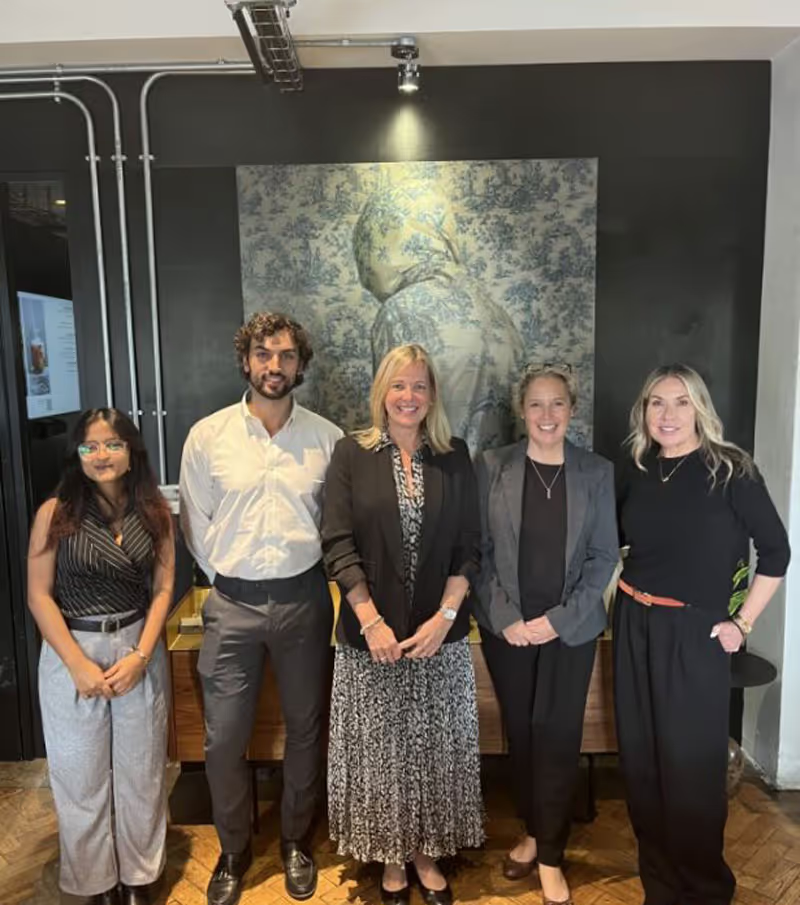
On 16th September, K2 Corporate Mobility welcomed mobility and HR leaders to our London Mobility Leadership Morning, at The Ministry, Borough, for a fast‑paced programme of insight, debate and practical takeaways.

On 16th September, K2 Corporate Mobility welcomed mobility and HR leaders to our London Mobility Leadership Morning, at The Ministry, Borough, for a fast‑paced programme of insight, debate and practical takeaways.

The morning brought together partners and friends from across industries, including insurance, consulting and academia, to explore how mobility can drive business resilience, improve the employee experience, and accelerate progress on sustainability.

Session highlights

QBE: Mobility transformation with ESG at the core

QBE shared how they are reshaping global mobility to deliver a consistent, employee‑centred experience and stronger business outcomes. Key moves include clarifying ownership through a dedicated internal mobility function, introducing a core/flex framework for equitable benefits, simplifying processes with clearly mapped roles, and leveraging technology for end‑to‑end case management, all underpinned by compliance and risk governance.

Crucially, ESG considerations are embedded by design: partner selection emphasises shared sustainability ambition; the employee journey surfaces greener choices (e.g., home search, local transport, temporary housing) alongside wellbeing support; and a joint K2 & QBE project is mapping sustainability nudges across the assignment lifecycle. This approach aligns well with QBE’s organisational purpose of “enabling a more resilient future.”

Why it matters: ESG isn’t a bolt‑on; it’s now integral to how leading organisations structure mobility, improving experience, risk control and long‑term resilience.

K2 & University of Bath: Small Tweaks, Big Moves – Behavioural science in mobility

Khushi unpacked how behavioural science can turn good intentions into measurable action across the mobility journey. Using the EAST framework (Easy, Attractive, Social, Timley). she showed how small design choices (defaults, timely prompts, social proof) can nudge sustainable decisions and reduce friction for relocating employees and partners. The work forms part of K2’s Knowledge Transfer Partnership with the University of Bath, focused on nudging sustainability in global mobility supply chains through ethical, test‑and‑learn experimentation.

Why it matters: In complex programmes, (micro-interventions), from the wording of an email to the order of options in a form, can unlock outsized improvements in uptake, experience and sustainability outcomes.

Mercer: Global talent & mobility trends

Kate Fitzpatrick shared the latest data on what’s shaping global mobility and talent management. HR leaders are prioritising upskilling, employee experience, and diversity, while also navigating challenges like skills shortages, economic volatility, and the need for digital transformation. Mobility remains crucial for filling technical and leadership roles, supporting talent development, and enabling business growth. However, many organisations still see a gap between their mobility programmes and overall talent strategy, with cost and ROI measurement as ongoing challenges. There’s also a growing focus on making mobility more flexible, inclusive, and family-friendly, with support like tax assistance, language training, and cross-cultural support for employees on the move  

Why it matters:
Mobility is more important than ever for attracting, developing, and retaining talent, but it’s also getting more complex. The best results come when mobility is closely linked to business strategy, supported by technology, and designed with people at the centre.


Five takeaways for mobility leaders

  1. Design for people, prove with data. Put employee experience at the heart of policy and process, then instrument the journey to learn and iterate.
  2. Bake in ESG early. From partner selection to on‑the‑ground choices, embed sustainability and wellbeing throughout the lifecycle, not as an afterthought.
  3. Use core/flex to balance equity and agility. A consistent baseline plus targeted flexibility delivers both fairness and fit‑for‑purpose support.
  4. Nudge the journey. Small, ethical behavioural interventions (defaults, prompts, social proof) reduce friction and drive better outcomes.
  5. Strengthen your ecosystem. Collaboration across in‑house teams, partners and academia accelerate innovation, and resilience.

Thank you

A warm thank you to our speakers, Jules Le Pla (QBE), Khushi (K2 & University of Bath) and Kate Fitzpatrick (Mercer), and to everyone who joined us for an energising morning of learning and connection.

Frequently asked questions

Straight answers to the questions we hear most about global mobility.

What is the EAST framework used in behavioural science, and how does it apply to global mobility?

+

EAST stands for Easy, Attractive, Social and Timely, a behavioural science framework used to design small interventions that change how people act. In global mobility, it is applied through choices such as defaults, timely prompts and social proof, which nudge relocating employees and partners toward more sustainable decisions and reduce friction in the process.

Even small changes, such as the wording of an email or the order of options in a form, can produce outsized improvements in uptake, experience and sustainability outcomes across a mobility programme.

What is a core/flex framework for employee benefits in global mobility?

+

A core/flex framework combines a consistent baseline of benefits that applies to everyone with targeted flexible elements that can be adjusted to individual circumstances. It is used to balance equity and agility, so relocating employees receive fair, consistent support while still getting a package fit for their specific situation.

One organisation introduced this approach as part of a wider mobility transformation, alongside clarifying ownership through a dedicated internal mobility function and simplifying processes with clearly mapped roles.

Why do global mobility programmes often struggle to align with wider talent strategy?

+

Many organisations still have a gap between their mobility programmes and their overall talent strategy, even though mobility is central to filling technical and leadership roles, developing talent and enabling business growth. Cost and return on investment measurement remain ongoing challenges for HR leaders trying to link the two.

The best results come when mobility is closely tied to business strategy, supported by technology and designed around the people using it, rather than run as a standalone administrative function.

What kind of support makes global mobility policies more family-friendly?

+

Family-friendly mobility policies typically include tax assistance, language training and cross-cultural support for employees and their families during a move. The wider trend among HR leaders is to make mobility programmes more flexible and inclusive, rather than applying a single standard package to every relocation.

This reflects a broader shift in global mobility, where skills shortages and economic volatility are pushing organisations to make relocation support work harder for both the business and the employee.