



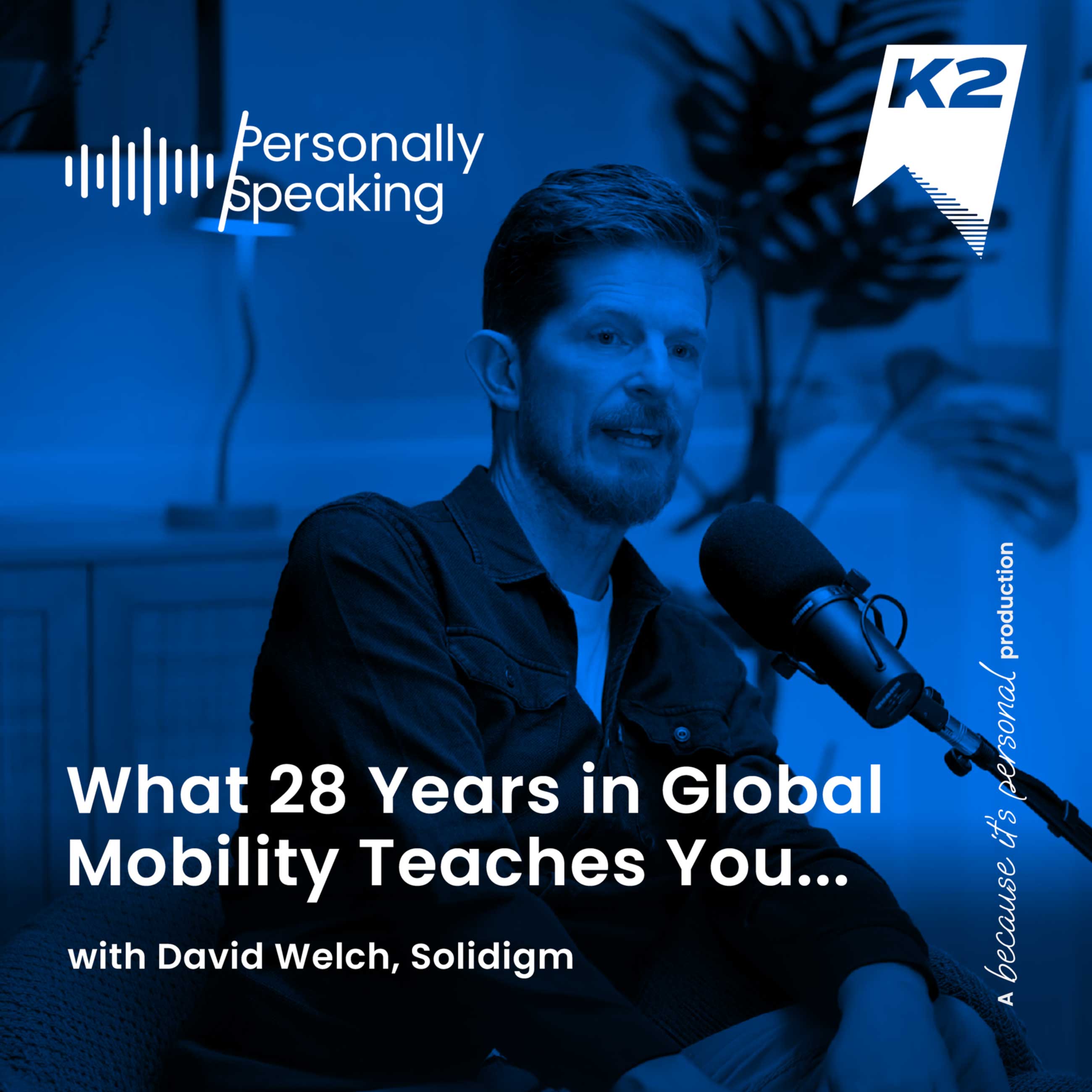
In this episode of Personally Speaking, our host, James Marshall sat down with David Welch, HR Programme Manager at Solidigm, to get a rare perspective from the client side. With nearly 30 years in the industry, and personal relocation experience across the US, Japan and India, David has seen mobility from every angle.

Personally Speaking – Episode 17
David Welch
Listen to episode 17
Global mobility is no longer just about getting people from A to B. Today’s global mobility programmes are about creating relocation experiences that work for the business, support the individual, and generally make life easier for everyone involved.
Here are the key topics that every HR and mobility professional should consider:
- The role of trust in a successful mobility programme.
- The ‘Six-Month Rule’.
- Balancing technology and the human touch in global mobility.
- Supporting the whole family and the hidden key to assignment success.
- How mobility programmes attract and retain the right talent.

1. Why Is Trust Important in a Global Mobility Programme?
Trust is the foundation for every successful relocation experience. Assignees trusting their employer and mobility partners, helps to pull their attention away from the logistics and focuses them on their role. This drives assignment success through reducing anxiety and improving engagement.
Organisations that prioritise transparent communication, active listening, and consistent support build stronger relationships, leading to better outcomes throughout the relocation journey.
2. Why Are the First Six Months of an International Assignment So Important?
David named this ‘The Six-Month Rule’, with the initial six months being the most influential for long-term success. During this period, the assignees and their families are adjusting to their new environments, cultures, and routines. Providing structured support during these early stages, and encouraging patience, helps to prevent premature assignment failure.
3. How Should Technology Be Used in Global Mobility and Relocation?
Technology plays a vital role in modern mobility programmes, specifically when used to enhance, not replace, the human experience. Overuse of technology creates unnecessary distractions, stress, and information overload for assignees.
The most effective programmes strike a balance, using automation to improve efficiency behind the scenes while maintaining a strong human connection for critical, emotional, and high-touch moments.
4. How Can Organisations Support Families During International Relocation?
Relocation success is not just reflected in an assignee's performance, but also through the wellbeing of the entire family. Each family member adapts at a different pace, often experiencing emotional highs and lows at different times.
Providing tailored support, setting expectations early, and recognising that each individual has a different timeline ensures smoother transitions and reduces the risk of assignment failure.
5. How Does a Mobility Programme Support Talent Attraction and Retention?
Mobility programmes are important tools for attracting and retaining talent, but only when they are aligned with company values. A relocation programme should reflect organisational culture and set realistic expectations for assignees from the outset.
Rather than offering excessive benefits, successful programmes focus on consistency and alignment, attracting candidates who are the right long-term fit for the organisation.
About David Welch:
David Welch is a highly experienced global mobility leader at Solidigm, leveraging nearly 30 years of expertise across corporate, consultancy, and supplier environments. His career spans industries including technology, financial services, aviation, and Big Four consulting, giving him a broad and well-rounded perspective on the complexities of international mobility.
He holds the Global Professional in Human Resources (GPHR) designation and is a Certified Relocation Professional, reflecting his deep technical knowledge in global HR and assignment management.
Known for his people-first approach, David focuses on building trust-driven, high-impact mobility programmes that balance operational excellence with genuine human support, helping organisations deliver better outcomes for both their business and their people.
This episode makes it clear that great mobility isn’t complicated, but it is intentional. Whether it’s supporting families, getting the first six months right, or making sure your partners truly represent your brand, the fundamentals don’t change. They just need to be done well.
Interested in learning more from industry experts within Global Mobility? Make sure to subscribe to our Personally Speaking podcast on YouTube here.

