
Events

London Mobility Leadership Morning

AI, talent and service excellence in focus

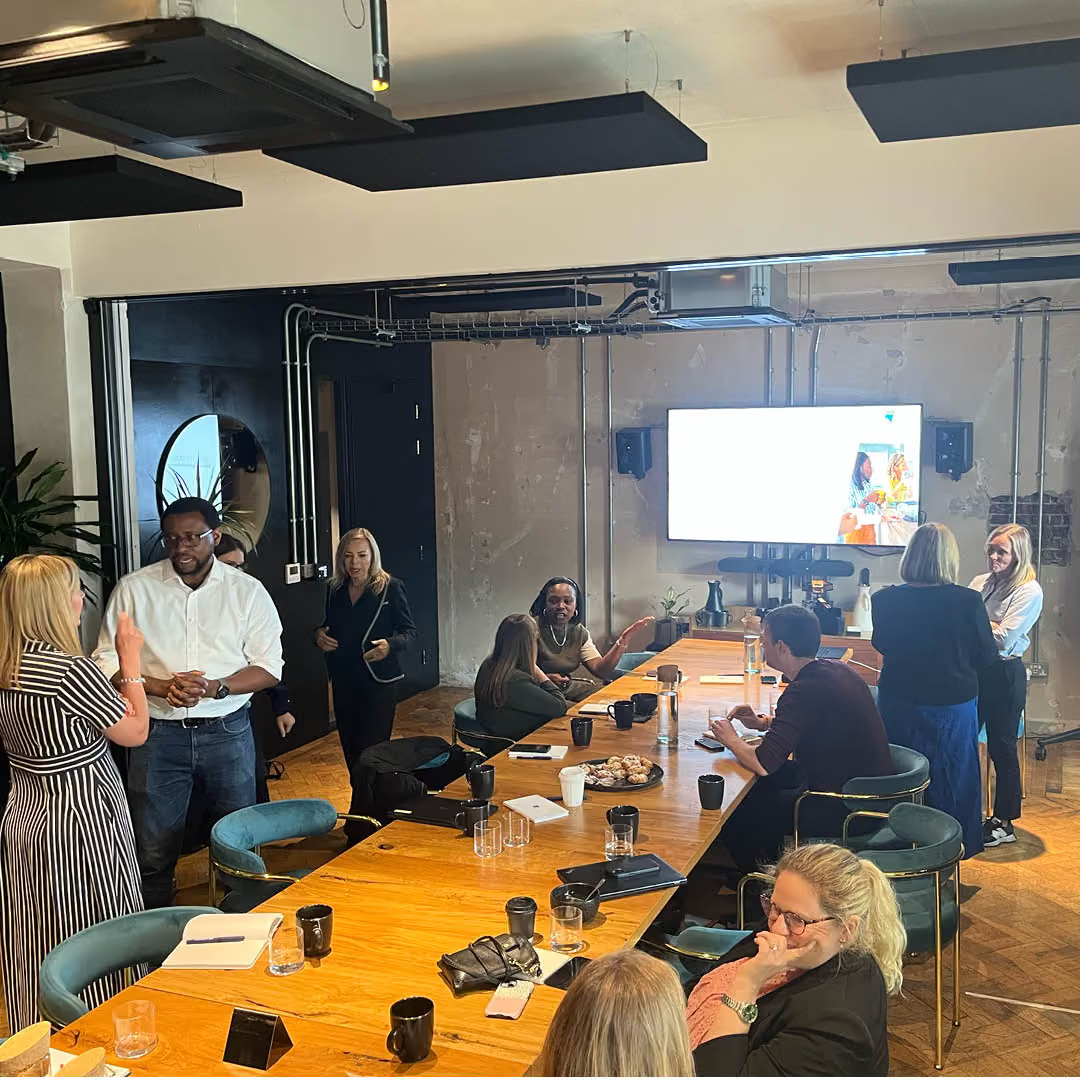
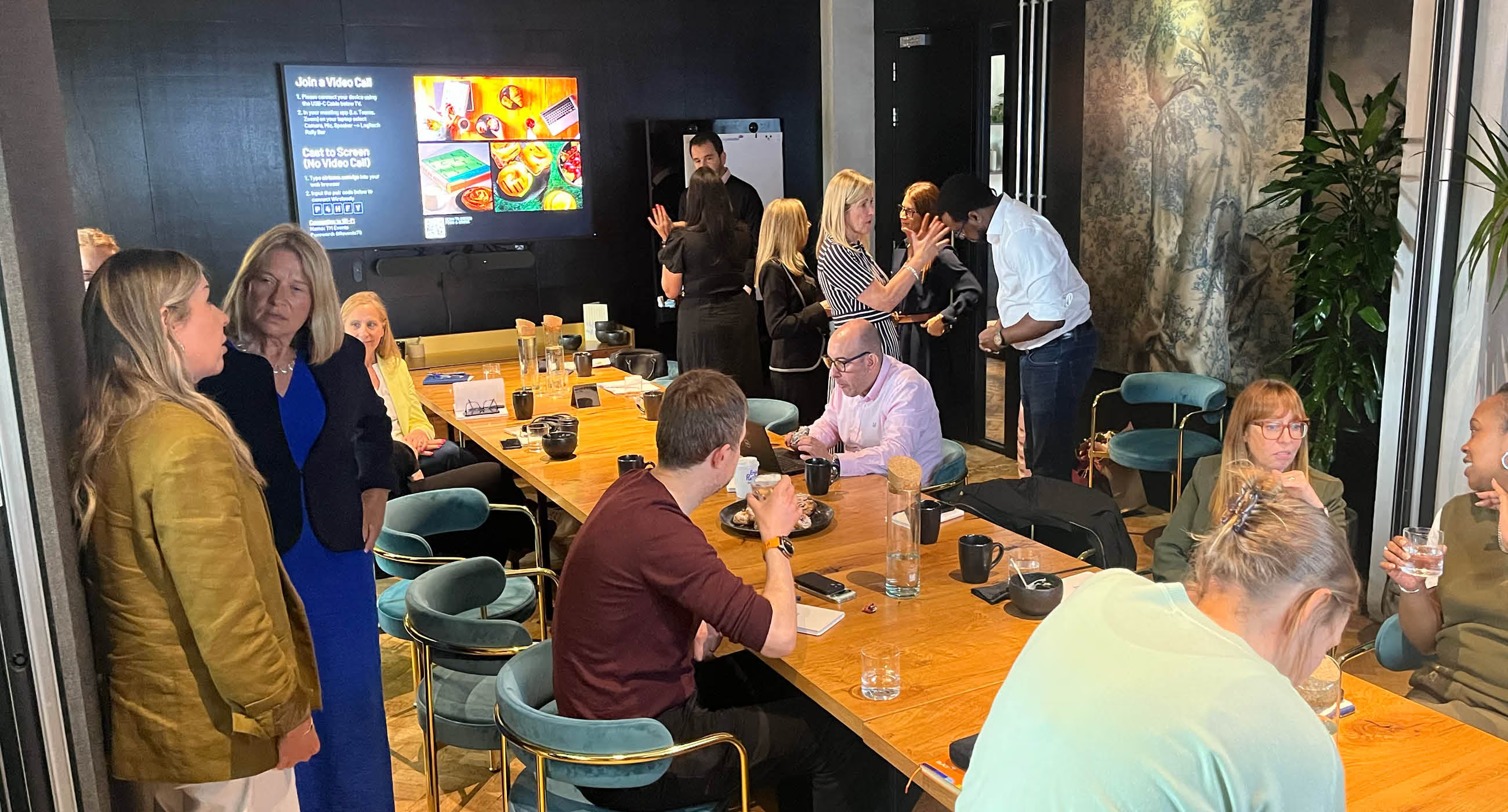
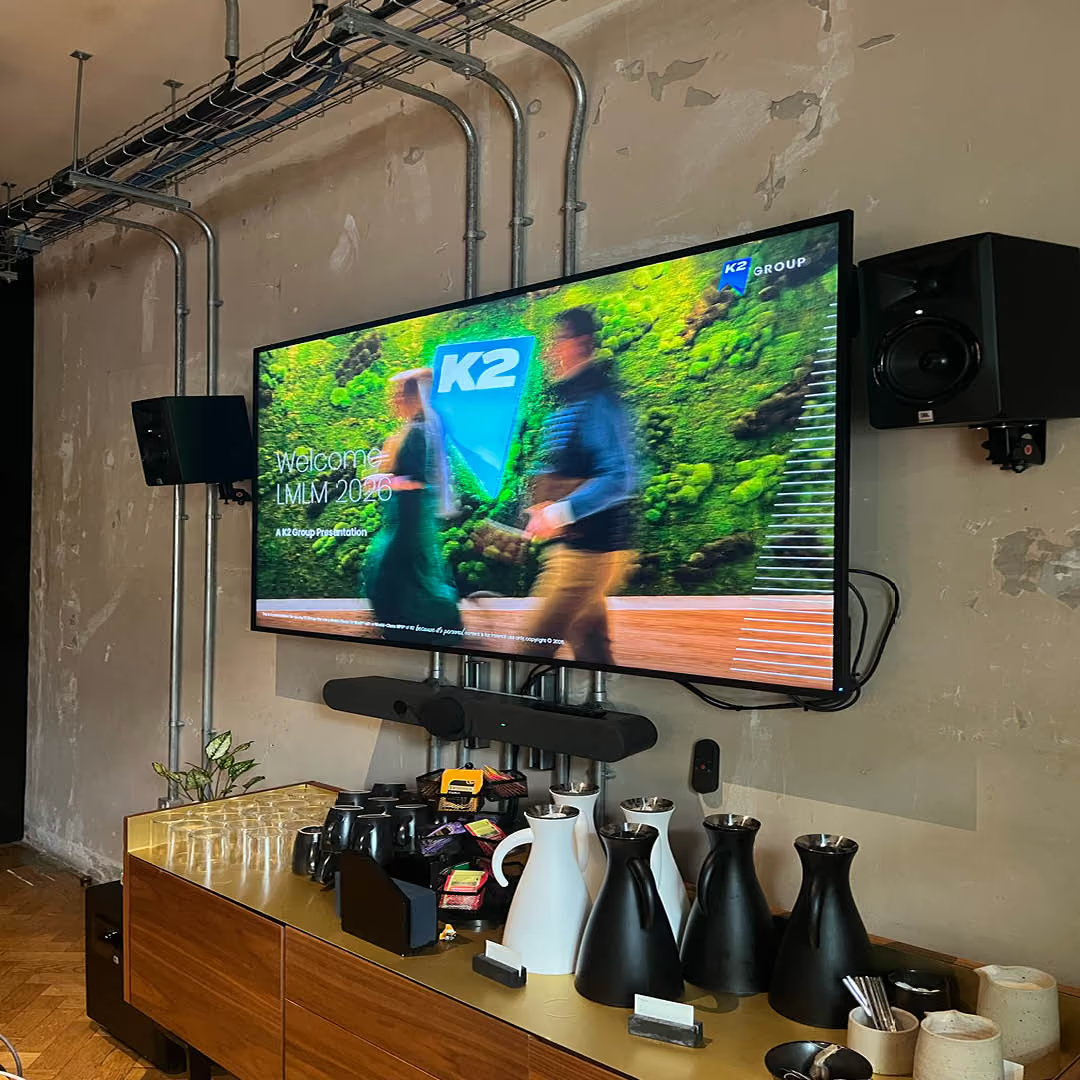
At K2 Group’s London Mobility Leadership Morning, Senior Global Mobility and HR leaders came together for a focused session on three topics shaping the function right now: AI for enterprise scale, access to talent, and service excellence. Held at The Ministry in London on Thursday 4 June, the morning combined expert-led sessions with open discussion designed to surface practical ideas leaders could take back into the business.

A focused forum for practical global mobility conversations

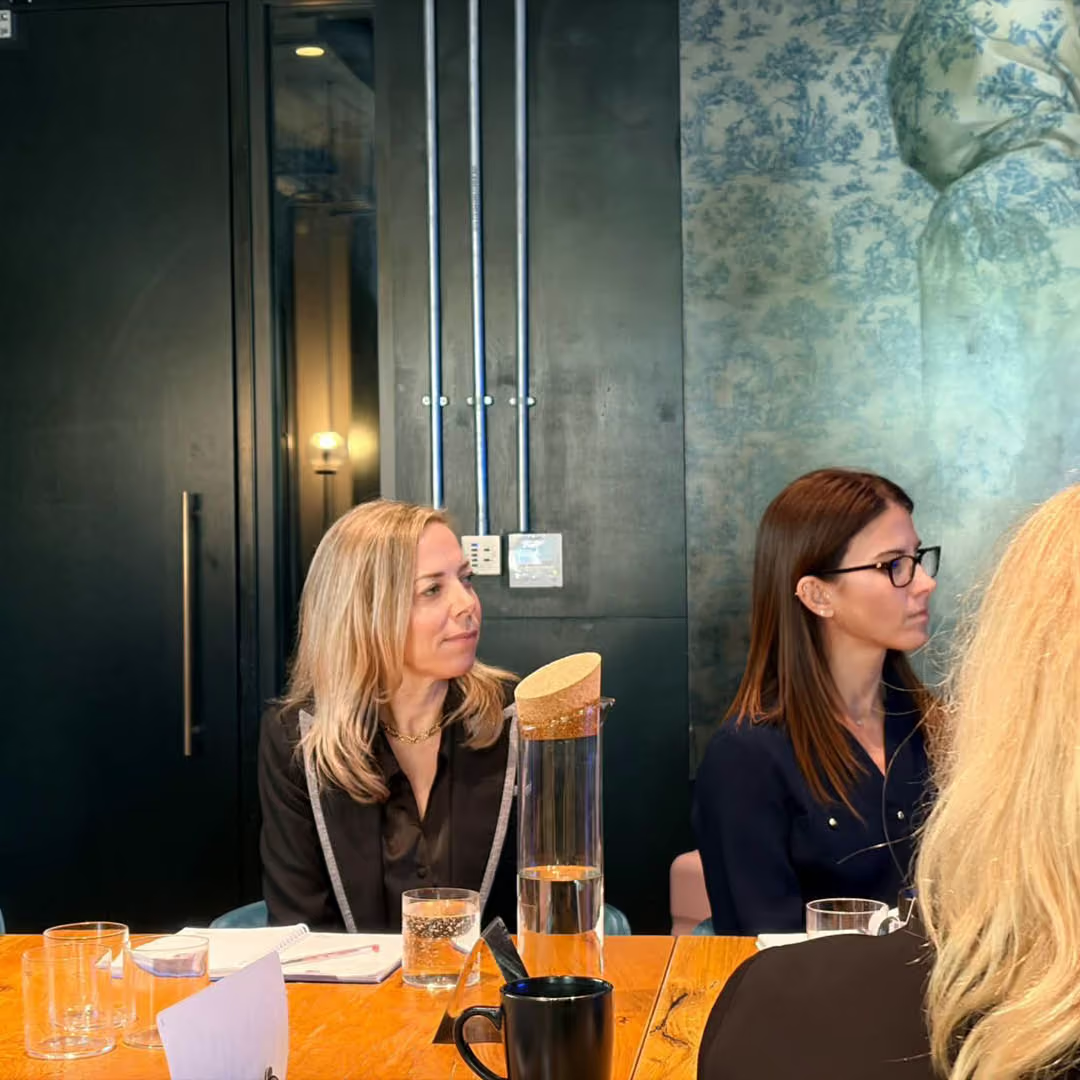
Designed as a senior-level event rather than a traditional industry briefing, the London Mobility Leadership Morning created space for meaningful discussion on the issues mobility teams are actively working through. The agenda brought together three perspectives: Dr Mac Misiura, Senior Machine Learning Engineer at Red Hat, on GenAI for enterprise use; Cath Good, Head of Global Mobility at BAT, on access to talent and aligning mobility to business needs; and Kate Marsden, Global Mobility Regional Lead (Europe) at Unilever, on service excellence.

Across the morning, the conversations reflected the value of bringing senior peers together around shared challenges and opportunities. From the application and introduction of AI in the Global Mobility function to changing programme design and continuous improvement, the content was grounded in real-world considerations rather than theory alone.
AI in mobility starts with clarity, not just capability

A key theme from the morning was the growing interest in how AI can support Global Mobility teams in a practical and responsible way. Building on Dr Mac Misiura’s session, discussion focused on the importance of understanding the role AI is being asked to play in the function. One of the clearest distinctions raised was chatbot versus agent: before implementation, teams need to be clear on the purpose of the tool, the questions it is expected to handle, and the data sets it will draw from in order to produce useful outputs.

Just as importantly, there was broad agreement that human oversight and judgement must remain in place. In a function where policy interpretation, employee experience and compliance all intersect, leaders recognised that AI can support decision-making, but should not replace the people responsible for applying context, judgement and control.

Mobility programmes are evolving alongside talent needs

Cath Good’s session prompted discussion around how programmes are changing in response to both business priorities and employee expectations. Rather than defaulting to more traditional choices such as assignment, permanent transfer or remote working, there is increasing recognition that more flexible, “agnostic” arrangements may sometimes be the better fit, particularly where family needs are a factor or the travel time between host and home is relatively manageable.

Another important point was the role of Global Mobility in the recruitment process for overseas roles. Bringing GM into conversations earlier helps organisations assess candidate suitability, shape realistic package expectations, and make more informed decisions that work for both the business and the individual. The discussion reinforced something many organisations already know: mobility delivers strongest value when it is involved early enough to influence outcomes, rather than simply operationalise them.

Service excellence depends on listening and showing progress

The final session, led by Kate Marsden, centred on service excellence and the role stakeholder engagement plays in successful transformation. A strong takeaway from the discussion was that progress is more likely to land well when businesses actively use stakeholder feedback as part of change roll-out and communicate clearly how that feedback has shaped the end result.

That thinking was captured in a simple but powerful message: we listened, and here is how we are improving the experience. Whether the goal is service enhancement, policy redesign or wider transformation, that kind of visible responsiveness is often what creates buy-in and helps change feel meaningful rather than imposed.

The move is only one part of the wider employee journey. Read our Thinking Paper to learn more about why the move is not the outcome.

A morning built around relevance, discussion and practical takeaways

What stood out throughout the event was the calibre of both the content and the conversation. The London Mobility Leadership Morning brought together expert insight, honest discussion and real relevance for the leaders in the room, exactly the combination that makes these forums valuable. With AI, talent strategy and service excellence all high on the agenda for mobility teams, the event highlighted not only where change is happening, but how organisations can respond with greater clarity and confidence.

Continue the conversation on AI in mobility

The discussion at the London Mobility Leadership Morning made one thing clear: AI has real potential in Global Mobility, but its value depends on how thoughtfully it is applied. For organisations considering where AI can support relocation and mobility without losing the human connection, our Insight guide explores the opportunities, risks and key questions mobility leaders should be asking. The guide page describes topics including how sentiment scoring and content personalisation can enhance experience, where automation supports service and where human judgement remains critical, the risks of over-automation in high-touch relocation, and a framework to help evaluate AI opportunities responsibly.

Download the guide here: What Role Should AI Play in Corporate Relocation?

Frequently asked questions

What is the difference between an AI chatbot and an AI agent in Global Mobility?
One of the key discussion points from the London Mobility Leadership Morning was the distinction between a chatbot and an agent, and the importance of being clear about the purpose of the tool from the outset. Before introducing either into a Global Mobility function, teams need to understand what questions the tool is expected to handle and what data points or data sets it will rely on to generate useful responses.

Can AI replace human decision-making in Global Mobility?
No, a strong theme from the event was that human oversight and judgement still need to remain in place when AI is used in the Global Mobility function. The discussion highlighted the risk of unreliable or “rogue” responses if tools are used without appropriate review, particularly in a function where policy, compliance and employee experience are closely connected.

How can AI support the Global Mobility function?
The event explored AI as a practical support tool for Global Mobility teams rather than a replacement for expertise. Dr Mac Misiura’s session focused on GenAI for enterprise use, while the wider discussion centred on using AI with clear purpose, defined use cases and the right supporting data.

How are Global Mobility programmes evolving?
A key takeaway from the session on talent was that programmes are moving beyond more traditional choices such as assignment, permanent transfer or remote working. The discussion suggested that more flexible, “agnostic” arrangements may sometimes be appropriate where family needs require flexibility and where travel time between home and host locations is relatively manageable.

Why should Global Mobility be involved earlier in overseas recruitment?
The event discussion reinforced the importance of Global Mobility being part of the conversation when overseas roles are being recruited for and when potential candidates are being considered. Earlier involvement helps organisations align business needs, consider whether candidates sit within a talent pool, and avoid overpromising on package terms before the right structure has been assessed.

What does service excellence mean in a Global Mobility programme?
At the London Mobility Leadership Morning, service excellence was discussed in the context of continuous improvement and successful change roll-out. A key message was that stakeholder and business feedback should be actively used, addressed and reflected in programme changes to help create buy-in and improve the overall experience.